Vista Wall Design designs, builds, and installs custom TV bump-out and recessed walls for suitable non-load-bearing applications. Whether the finished wall projects forward around the screen or places it within a precise niche, the design is planned around the room, television, framing, cable routes, and finish before nationwide installation begins.
Both approaches integrate the screen into a purposeful wall composition. The right direction depends on the existing wall, the desired depth, television access, cable routes, and how the new feature should relate to the room.
01
TV Bump-Out Wall
A TV bump-out adds a shallow non-load-bearing wall plane in front of the existing wall. The new depth can frame the screen, conceal conduit, and create controlled niches or ledges without opening the structural wall behind it.
Projection depth, backing, niche dimensions, cable routes, finish transitions, and attachment points are resolved before framing begins.
02
Recessed / Niche TV Wall
A recessed or niche TV wall sets the screen below the surrounding finished plane for a flush, minimal composition. Vista creates these niches within suitable non-load-bearing assemblies without modifying load-bearing framing.
Screen clearance, mount access, ventilation, conduit, serviceability, and the finished reveal are coordinated around the selected television.
TV BUMP-OUT WALL PROJECTS
Designed Around the Room and Screen
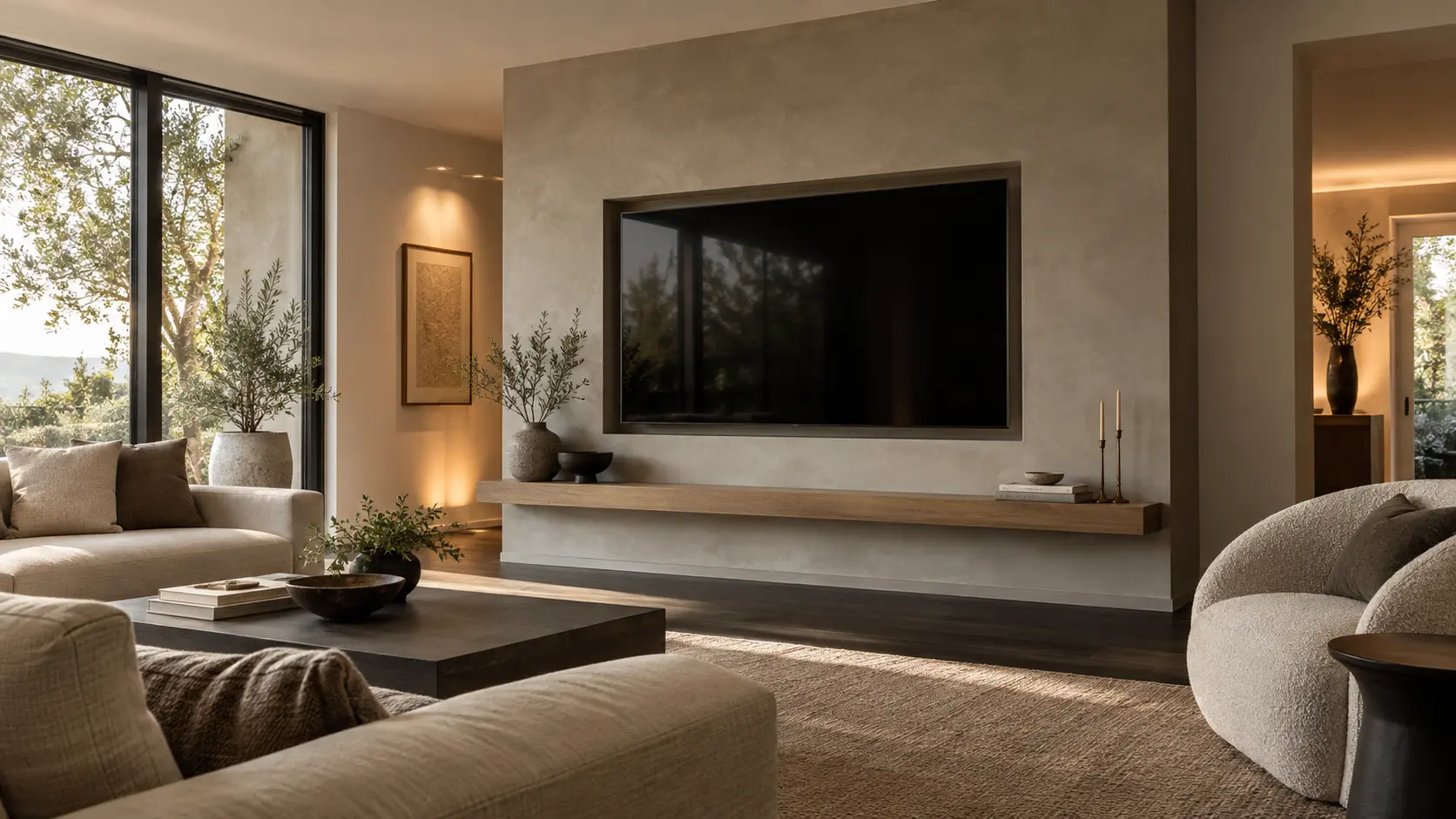
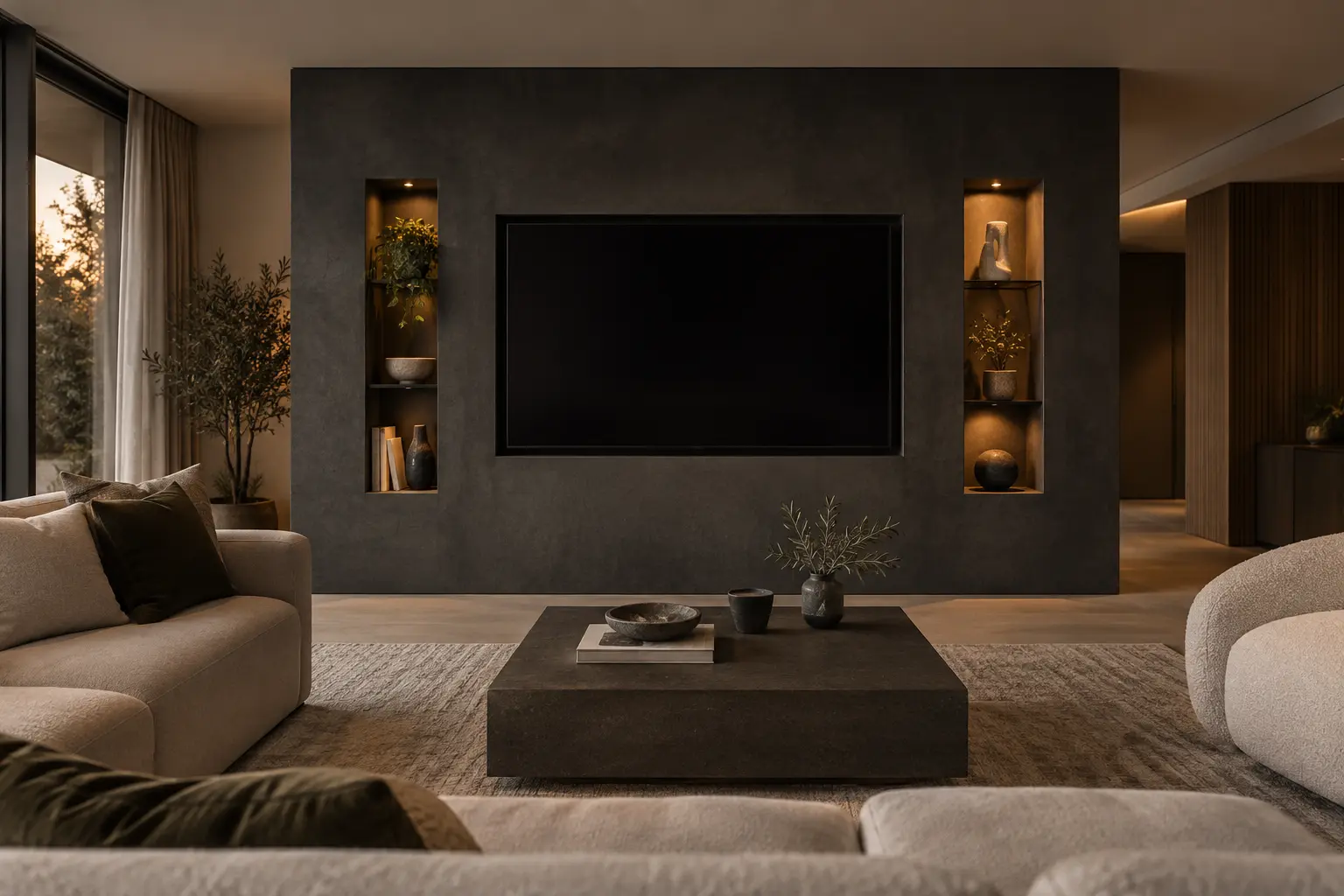
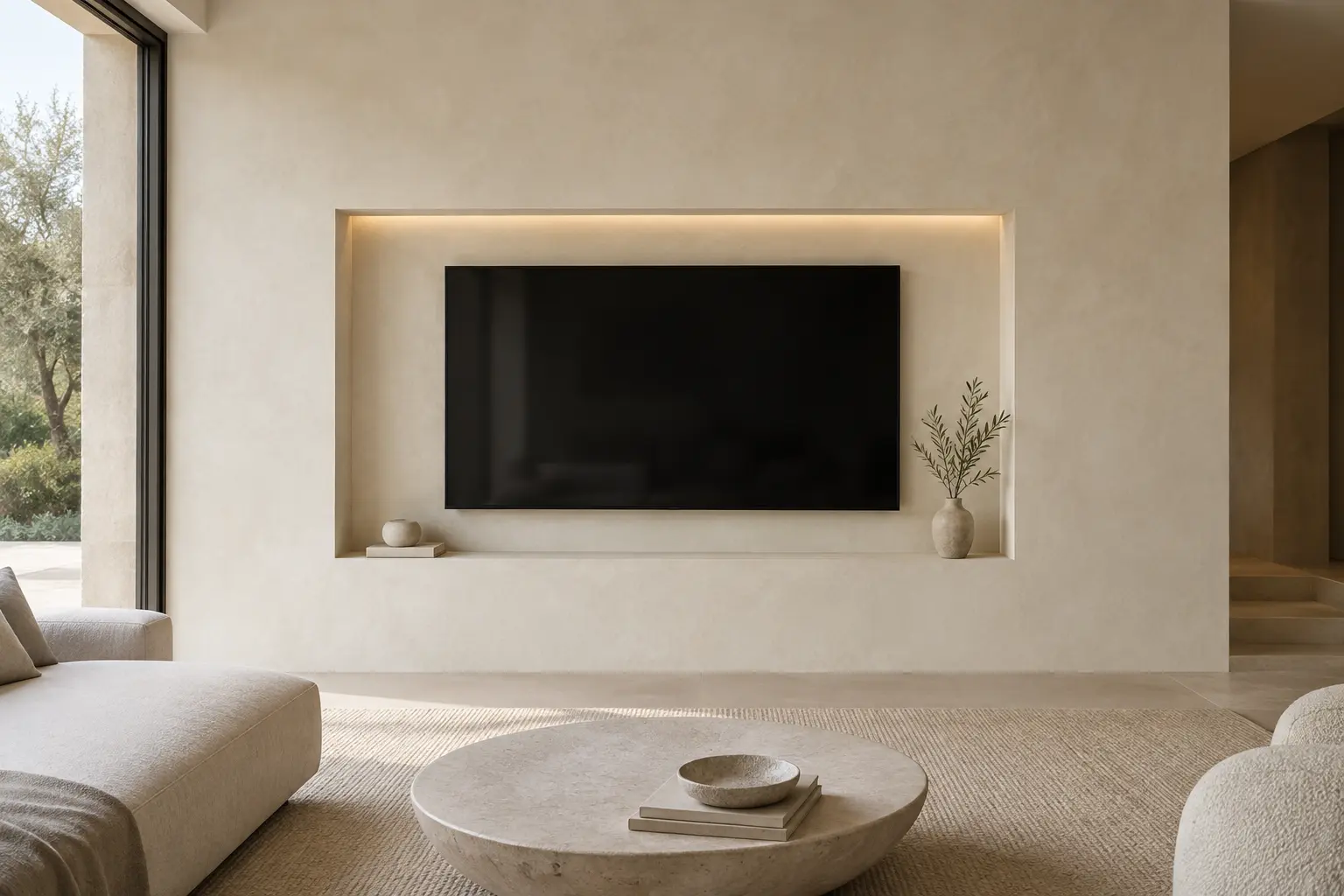
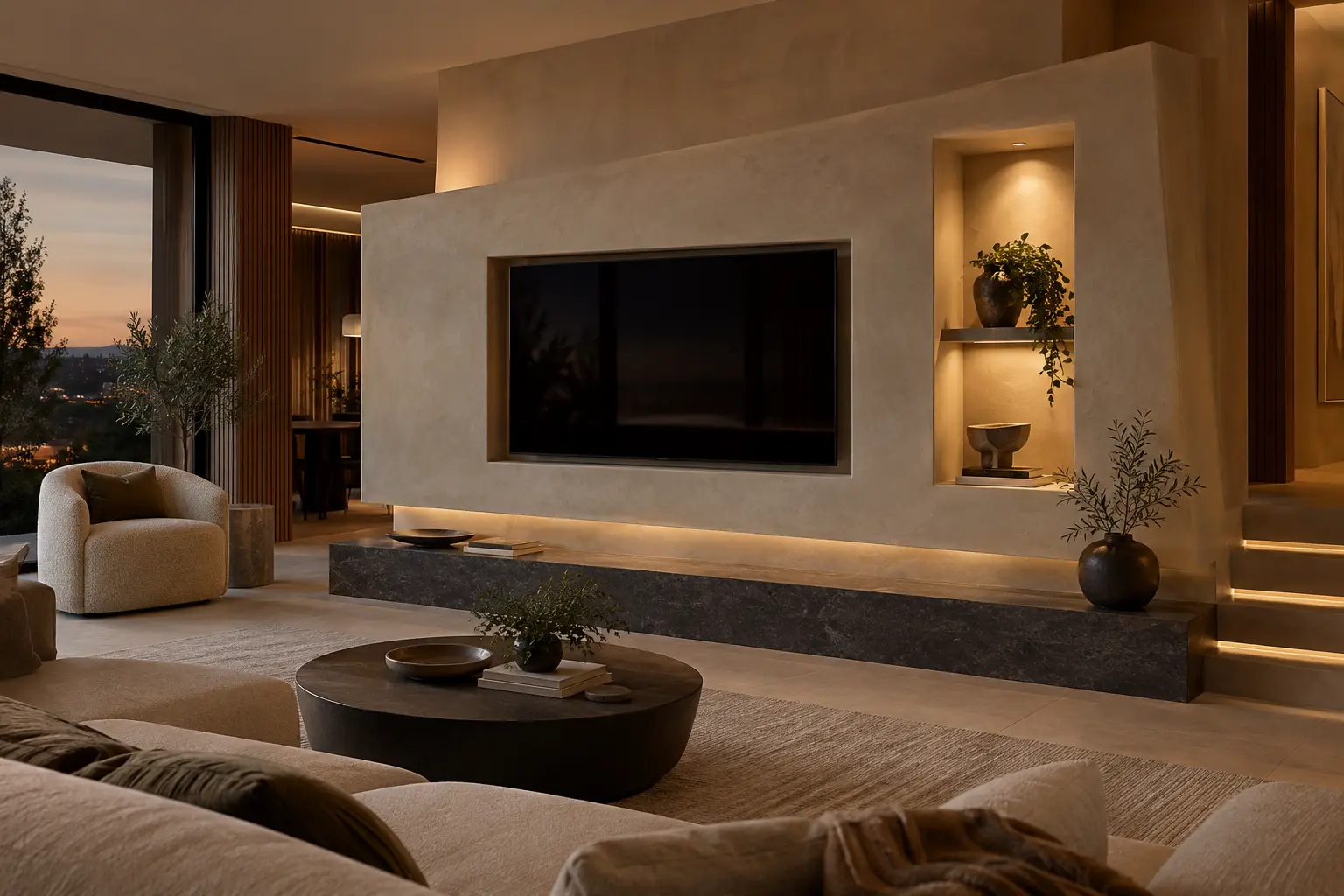
Three distinct concepts show how projection, recessed depth, material, lighting, niches, and ledges can shape a custom media wall.
01
DESIGN CONCEPT
Sculptural Plaster Bump-Out
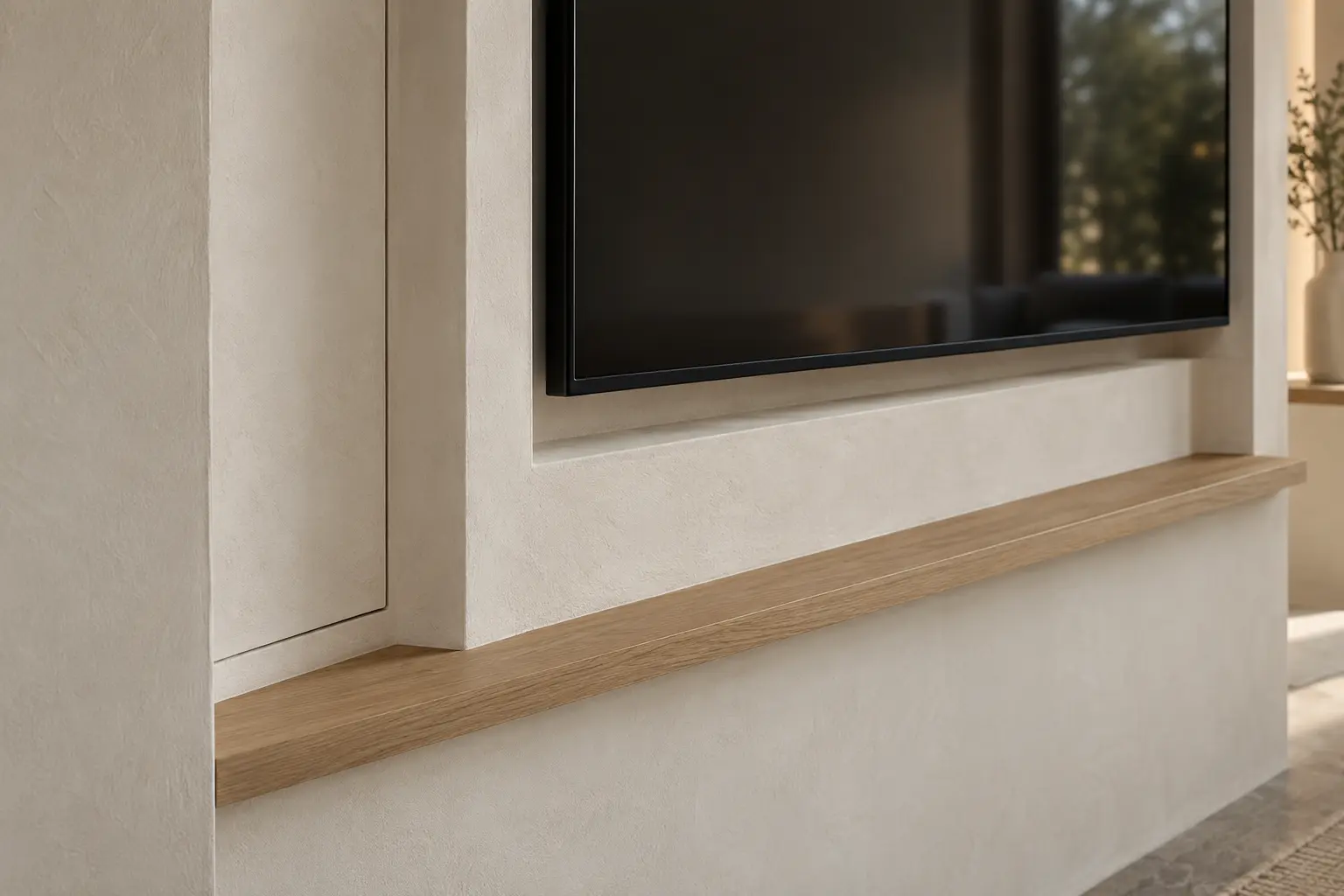
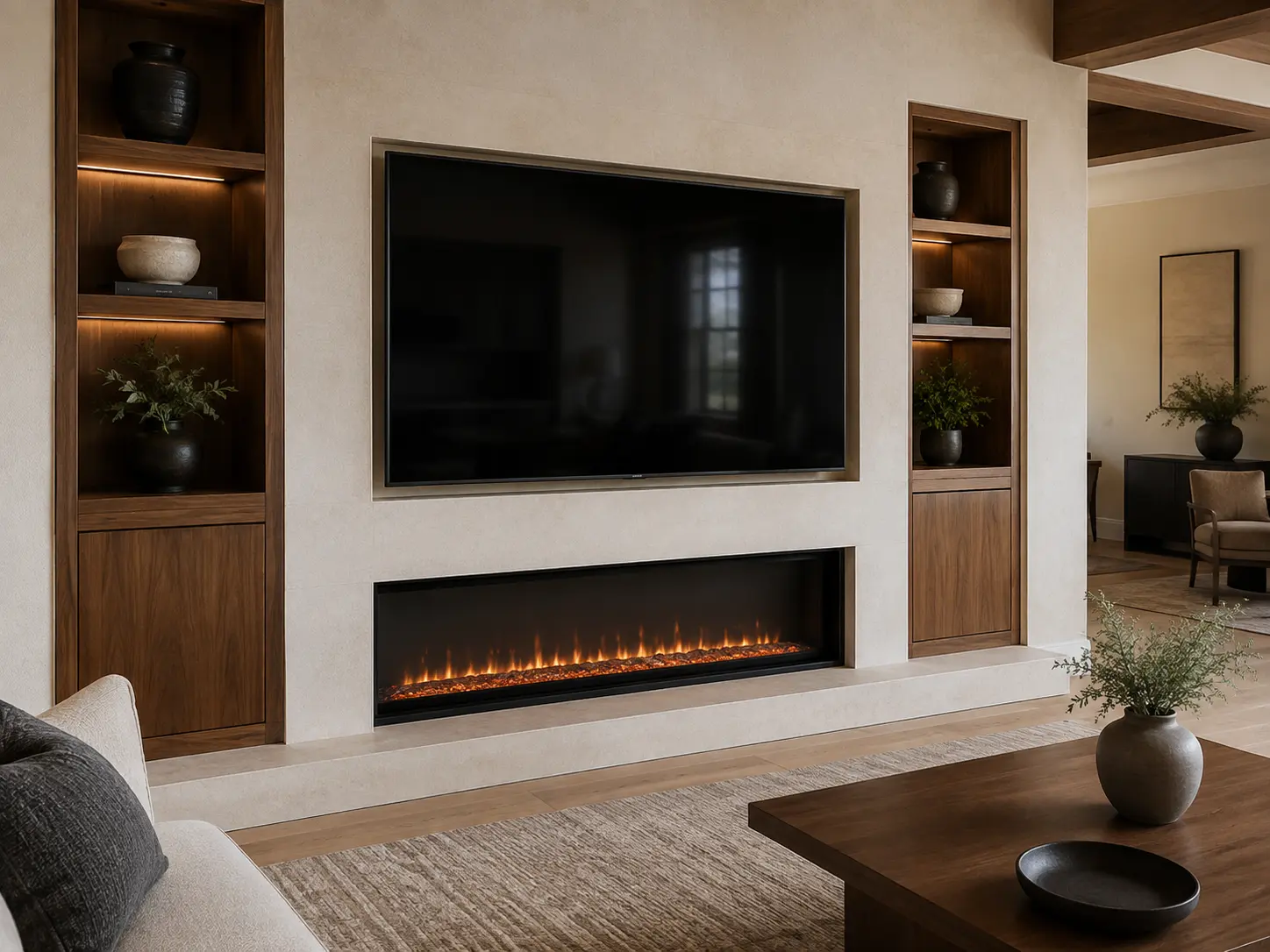
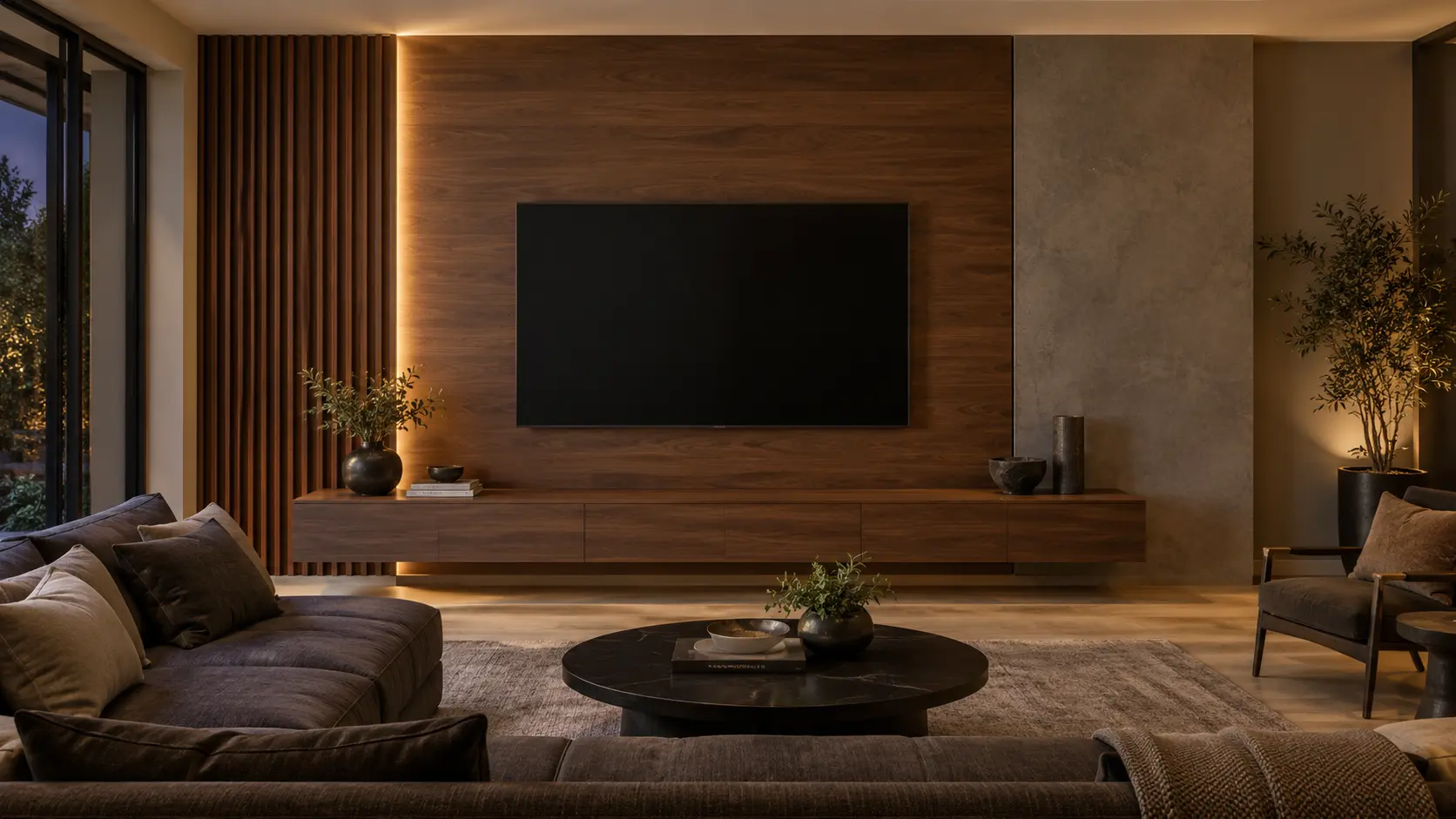
An asymmetric warm-plaster projection frames the recessed screen, one illuminated display niche, and a low dark-stone ledge as a single architectural feature.
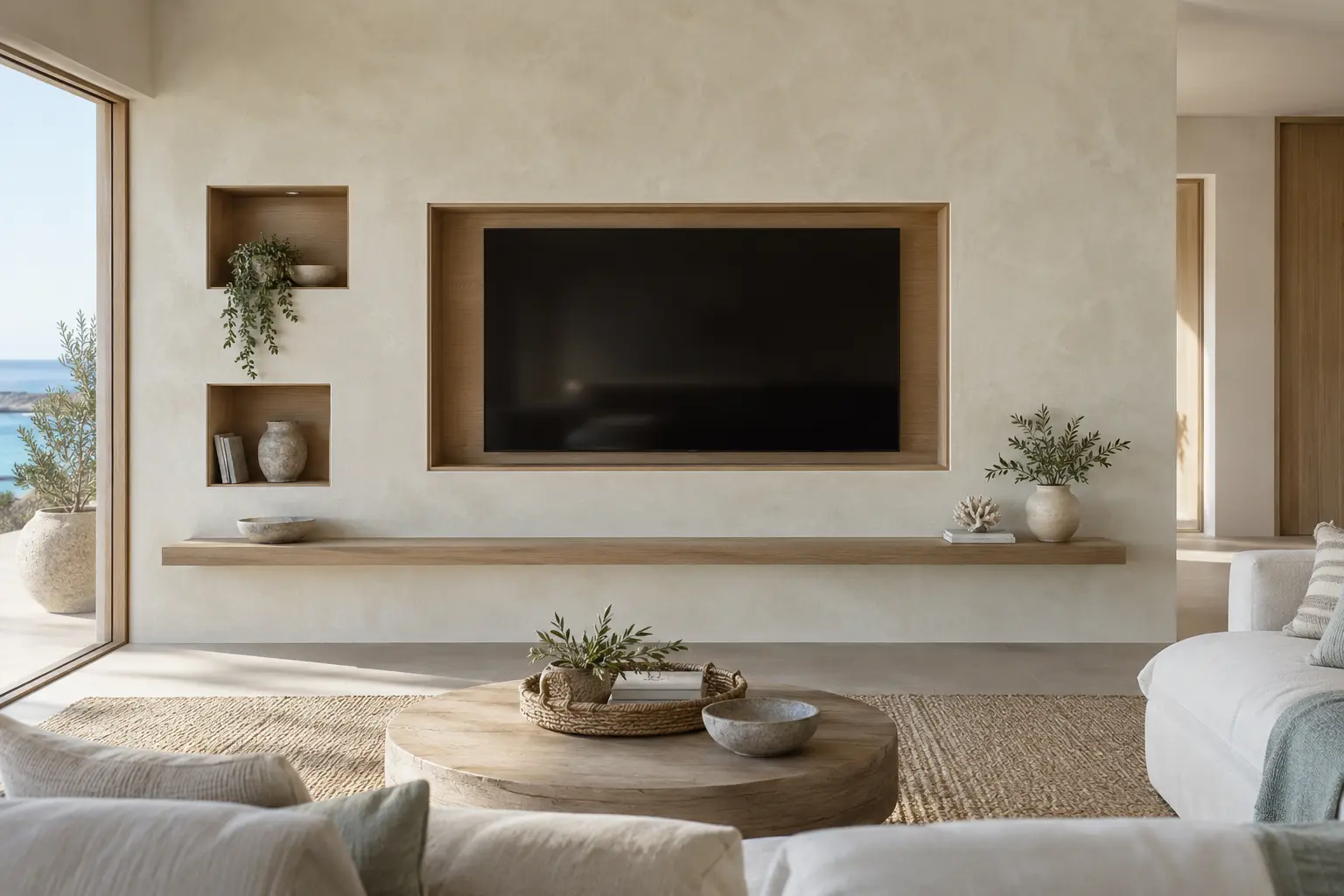
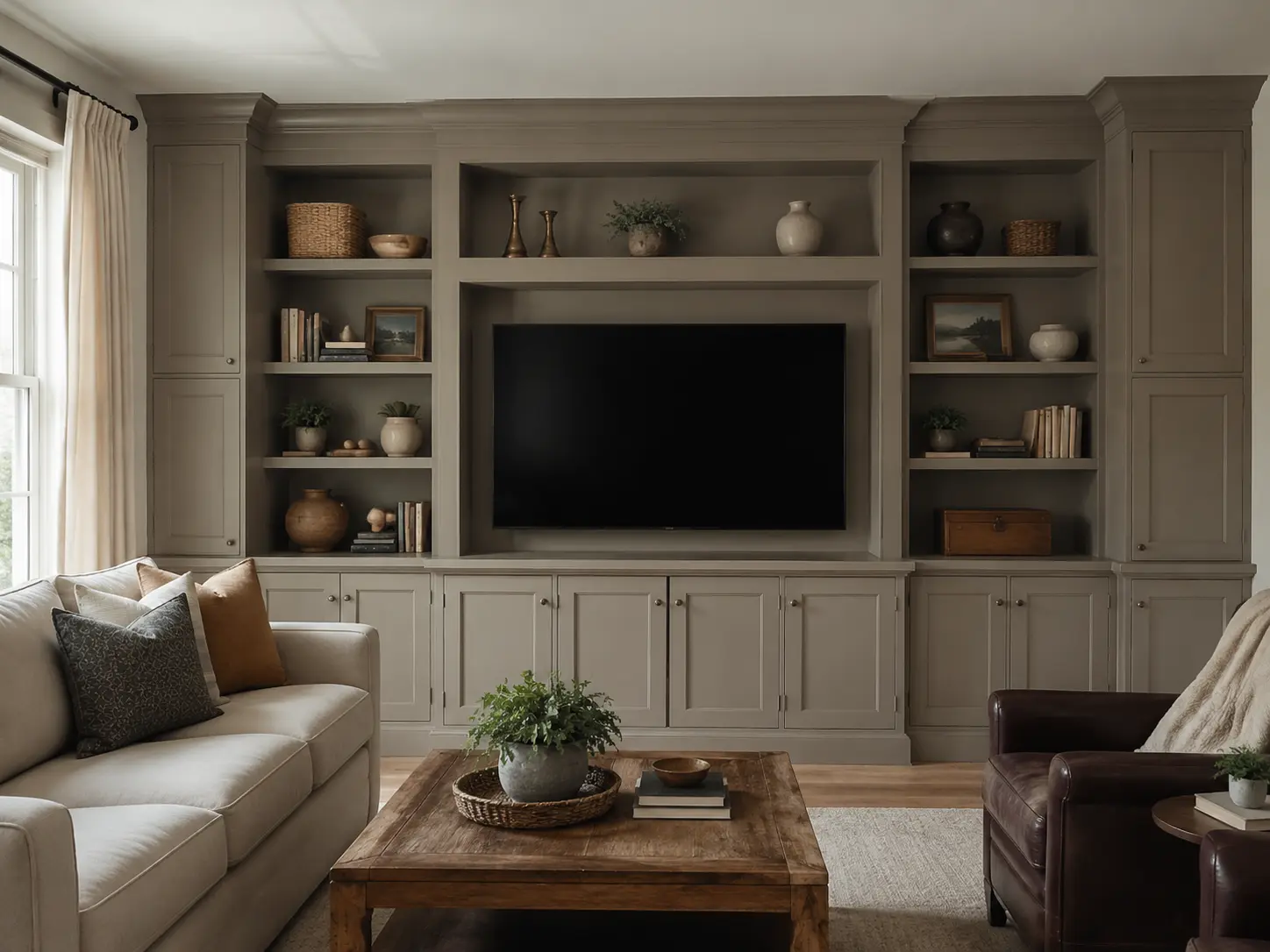
A broad pale limewash wall holds the television within an oak-lined niche, while two small display recesses keep the composition light and residential.
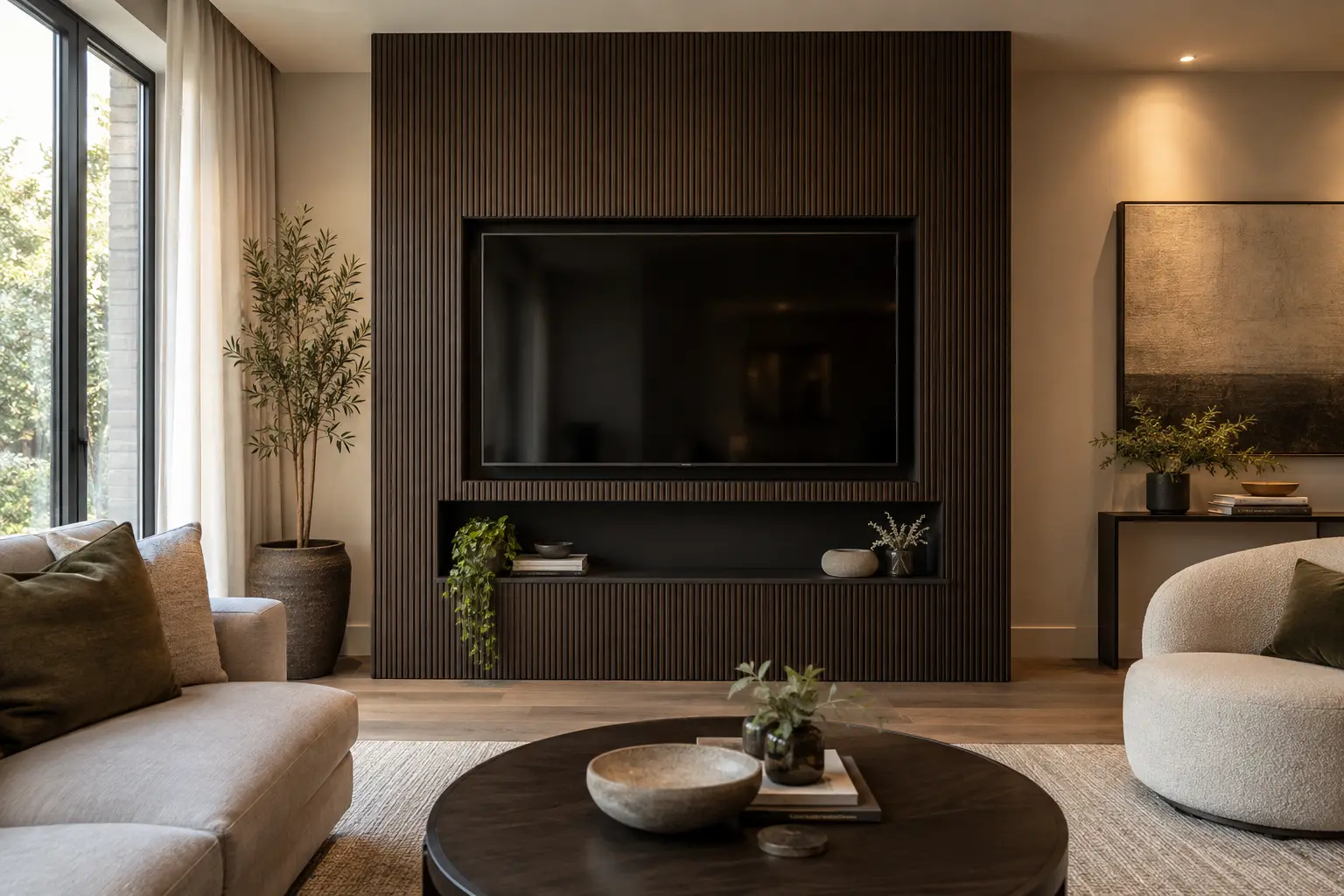
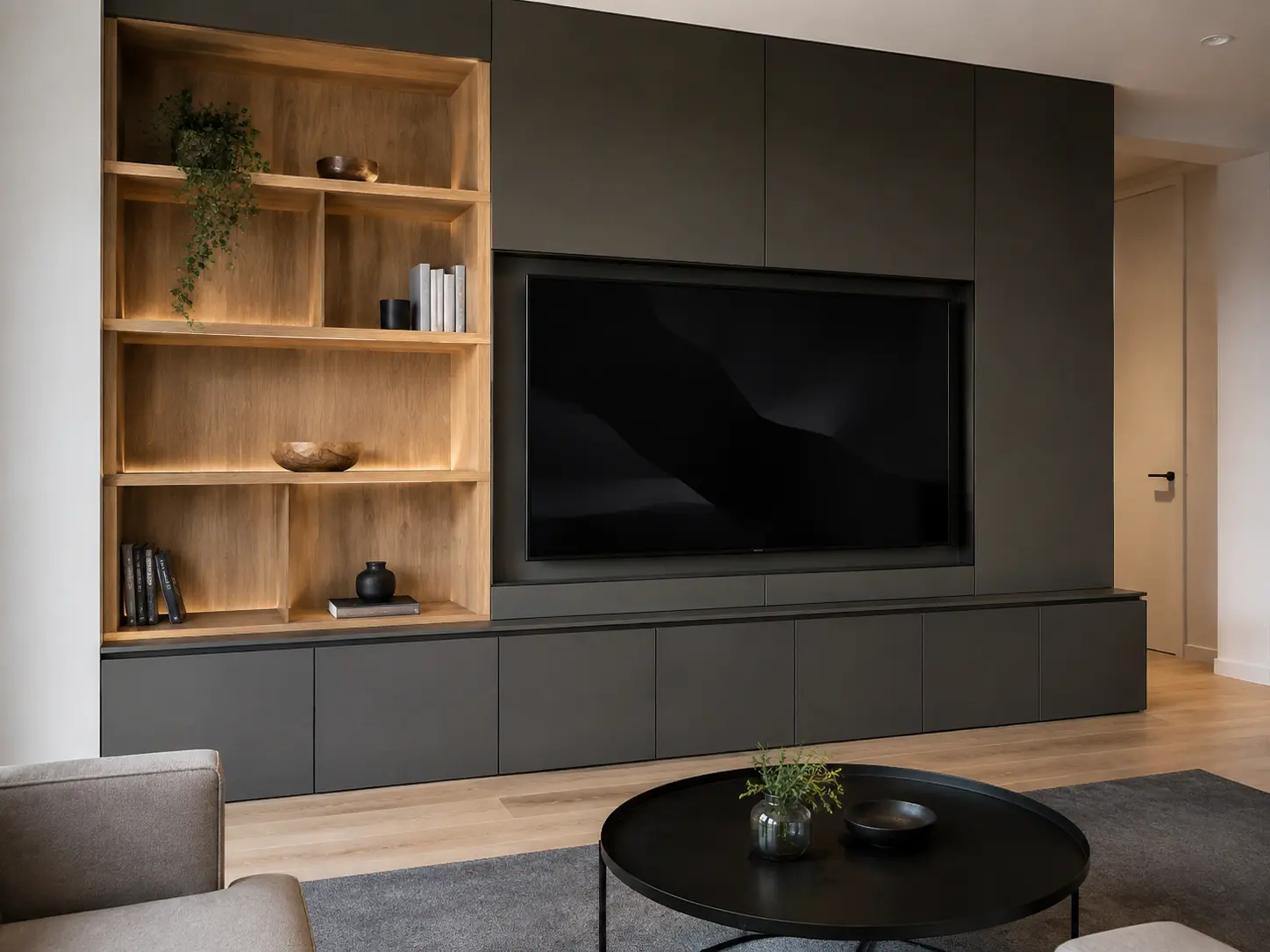
A ribbed smoked-oak bump-out gives a compact townhouse wall greater depth, with the screen recessed into the center and a narrow integrated ledge below.
A custom TV bump-out or recessed wall is not treated as a weekend DIY assembly. Framing depth, television backing, niche clearances, conduit, service access, lighting, drywall edges, and finish transitions must work together before the new wall plane is closed. Coordinating these details from the start creates a cleaner installation with concealed cable routes and proportions developed for the actual living room.
Vista completes these constructions only within suitable non-load-bearing applications and does not alter load-bearing framing. If the project also requires full cabinetry or broader storage, explore our Built-In Entertainment Centers.
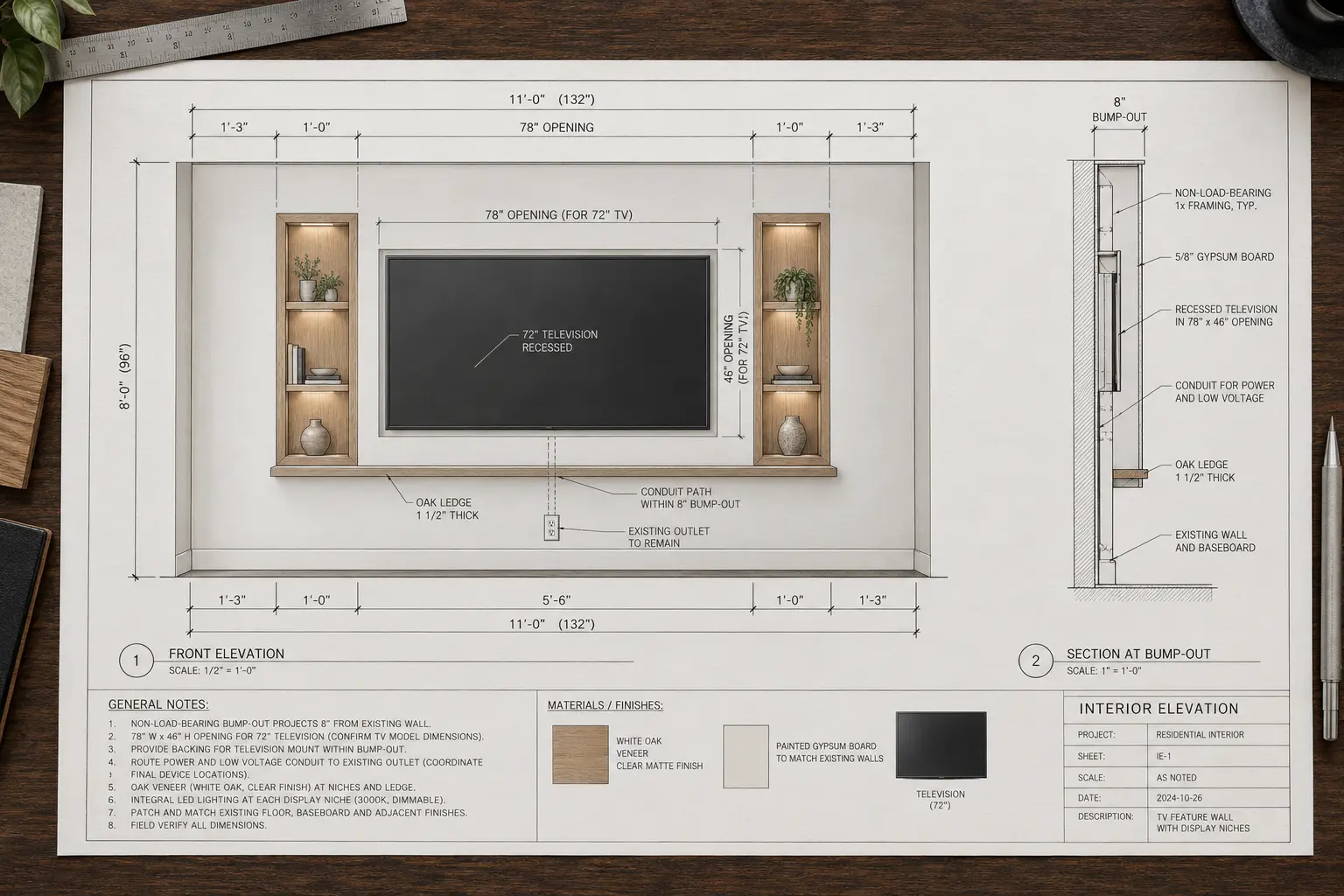
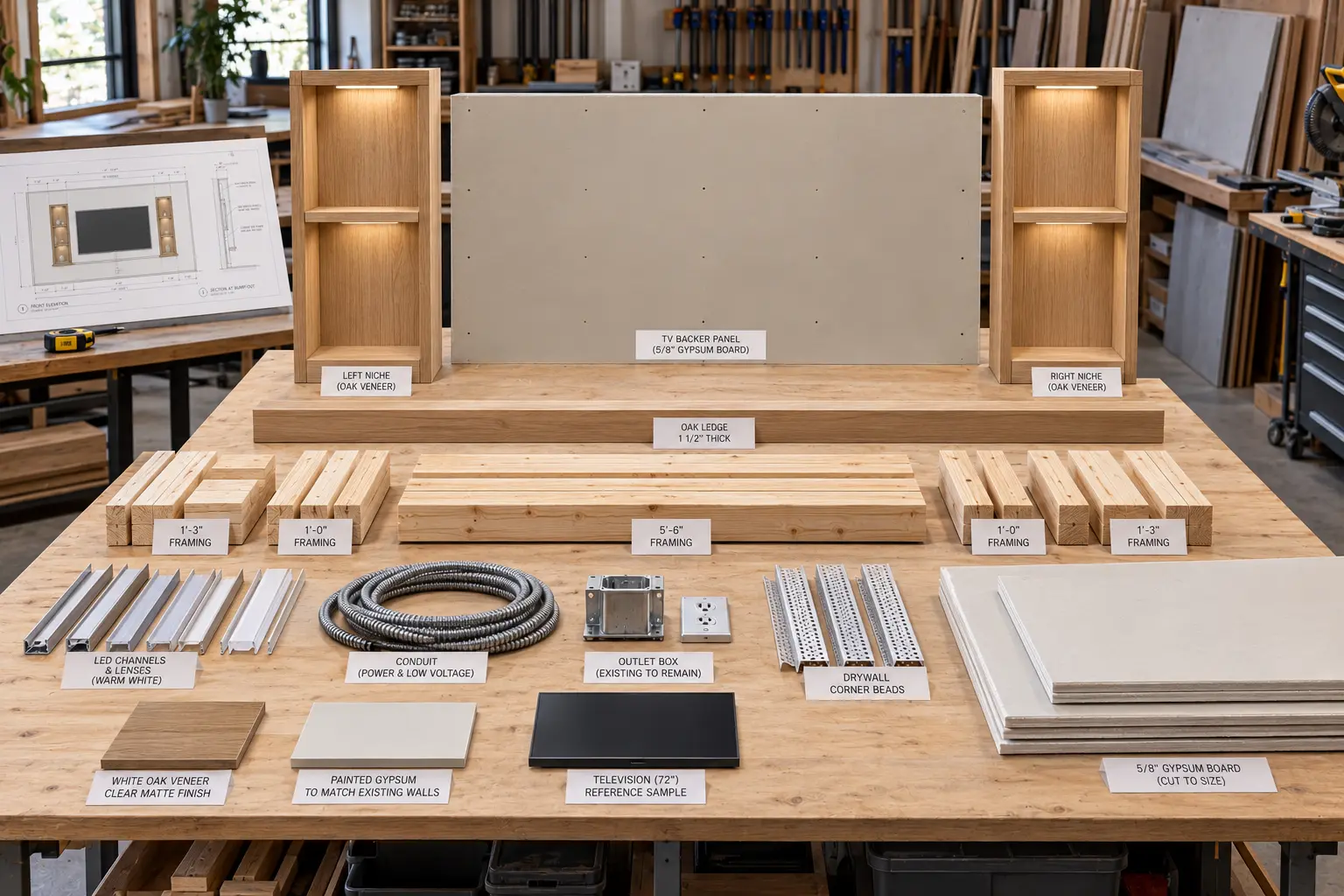
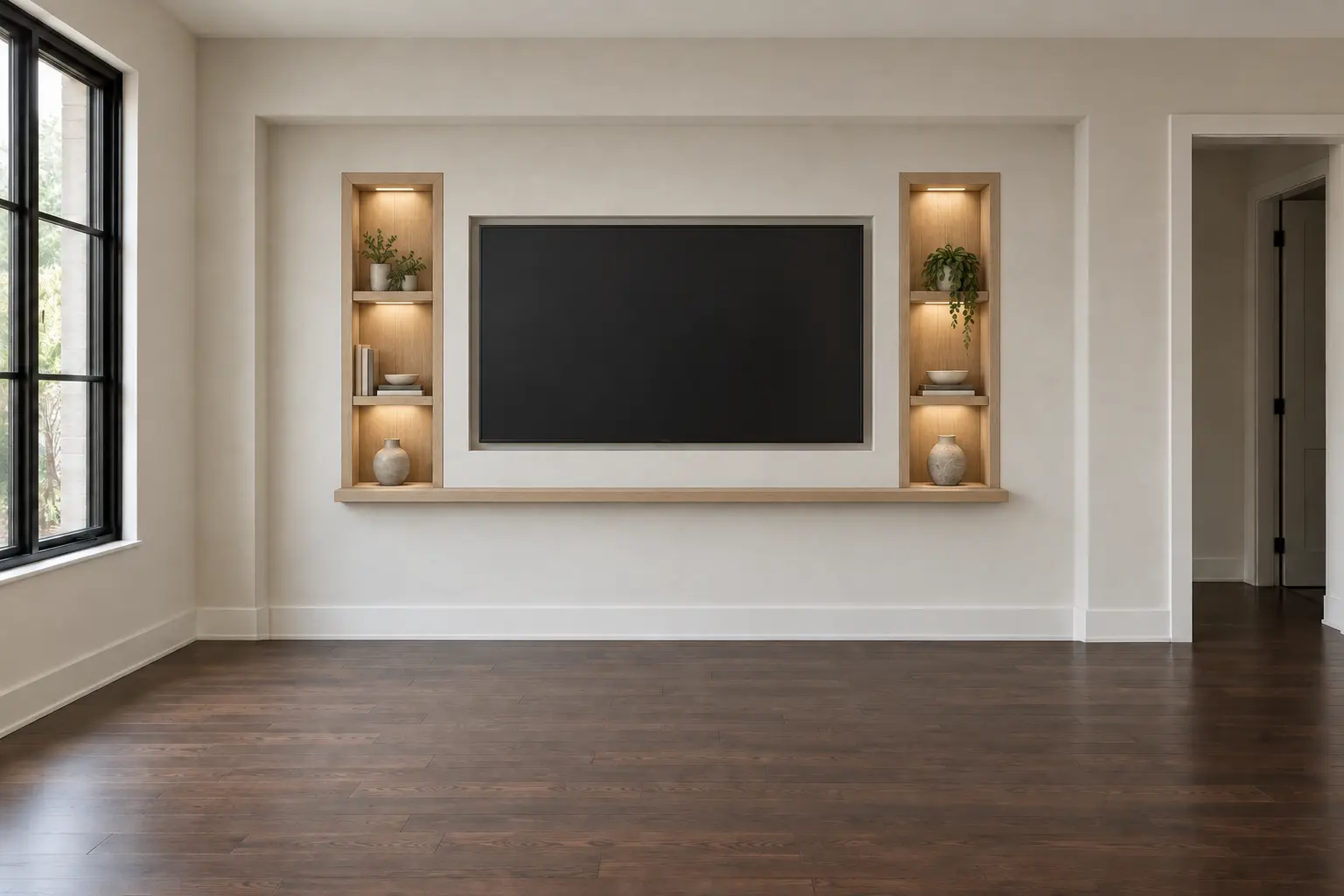
Follow one non-load-bearing TV bump-out from the untouched room and detailed elevation through workshop preparation to the matching finished installation.
CONFIRM A SUITABLE WALL
01 / 04
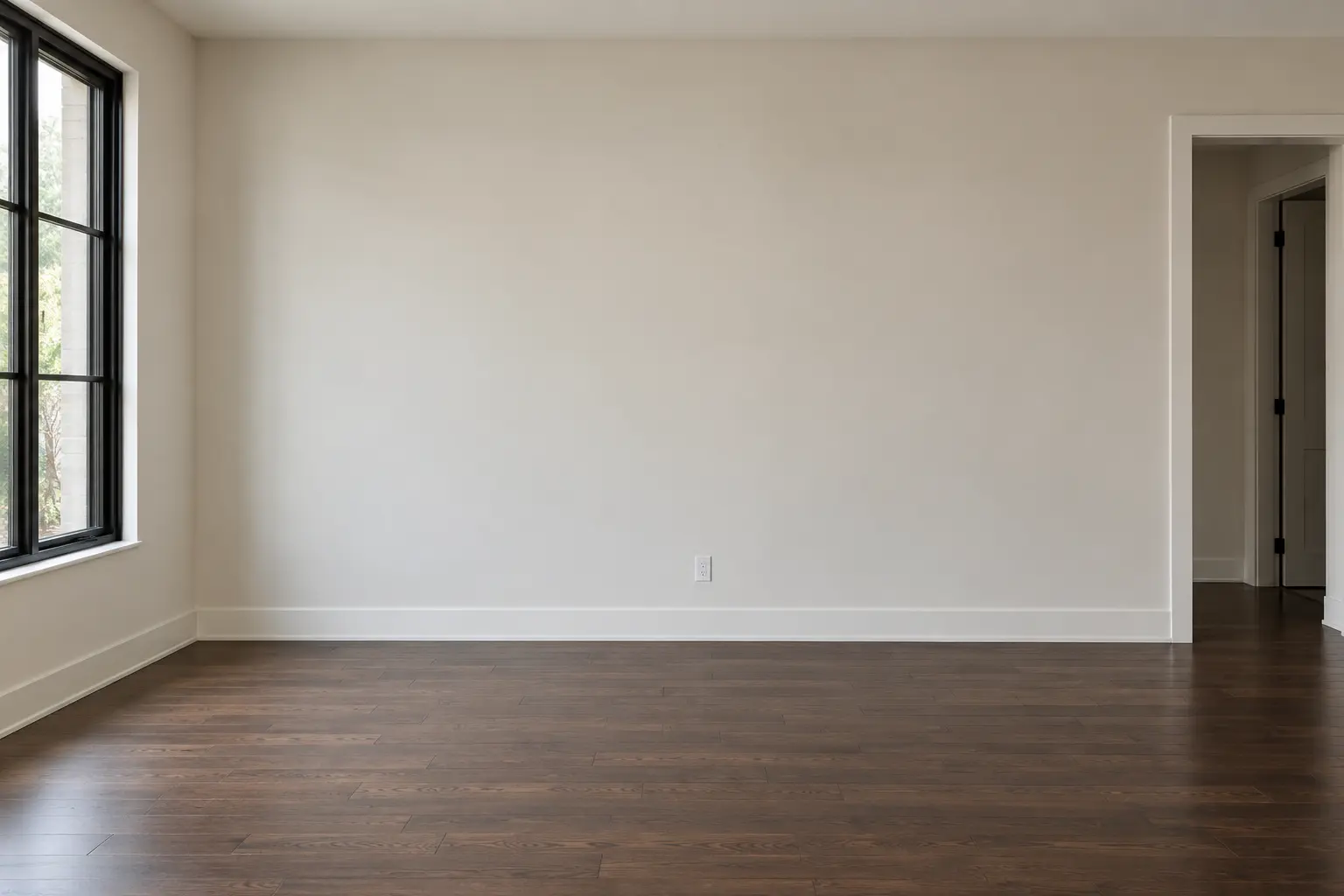
Measure & Assess
We document the empty wall, room dimensions, television and mount, existing outlets, cable routes, framing, and desired depth. Vista builds bump-outs and niches only in suitable non-load-bearing applications; load-bearing framing is not altered as part of this service.
DEFINE EVERY PLANE AND REVEAL
02 / 04
Select & Plan
A professional elevation fixes the bump-out depth, television niche, display recesses, backing, ledges, lighting, conduit, outlet use, and finish boundaries. The approved drawing becomes the dimensional reference for preparation and installation.
PREPARE THE HIDDEN STRUCTURE
03 / 04
Build & Prepare
Framing members, mounting backing, niche boxes, ledges, lighting channels, drywall components, finish samples, conduit, and cable-access details are prepared to the approved dimensions. Vista can conceal cable routes and connect equipment to an existing compatible outlet; new lines or licensed electrical work are arranged by the client.
MATCH THE APPROVED ELEVATION
04 / 04
Install & Review
The non-load-bearing frame, backing, niche components, finish, television mount, screen, lighting, and concealed cable routes are installed to the approved elevation. Alignment, reveals, access, ventilation, finish quality, and the completed composition are checked before handoff.
Swipe to follow the next stage
TV BUMP-OUT WALL FAQ
Frequently Asked Questions
Practical answers about bump-out depth, recessed screens, non-load-bearing framing, concealed wiring, electrical scope, and installation.
What's the difference between a TV bump-out and a recessed TV wall?
A TV bump-out adds a new wall plane in front of the existing wall, creating depth around the screen and space for concealed cable routes, backing, niches, or ledges. A recessed or niche TV wall places the screen below the surrounding finished plane. Both integrate the television into the architecture; the difference is whether the new composition projects forward or sets the screen inward.
Does a TV bump-out require structural or electrical work?
A bump-out or recessed wall normally requires non-load-bearing framing, mounting backing, drywall, and finish work. Vista does not alter load-bearing framing. We can install conduit, conceal cables, and connect equipment to an existing compatible outlet. New circuits, relocated outlets, or work requiring a licensed electrician are completed by a contractor arranged by the client.
What does the installation process involve?
Installation begins with documenting the wall, confirming that the proposed construction remains within a suitable non-load-bearing application, and developing the elevation. Framing, backing, niche components, conduit, drywall, finishes, the television mount, and approved lighting are then prepared and installed before alignment, access, ventilation, cable routes, and finish quality are reviewed.
CONTINUE EXPLORING
Related TV Media Wall Services
Compare fireplace, material-led, built-in storage, and cabinetry options within the TV Media Walls collection.