
In this article
An accent wall is one wall designed to stand out from the others in a room through a different color, texture, pattern, or architectural treatment. It creates a focal point and adds visual interest without changing every wall.
This guide explains the purpose of accent walls, the main design types, where they work best, and what to consider when choosing one for your space.
What Is an Accent Wall in Interior Design?
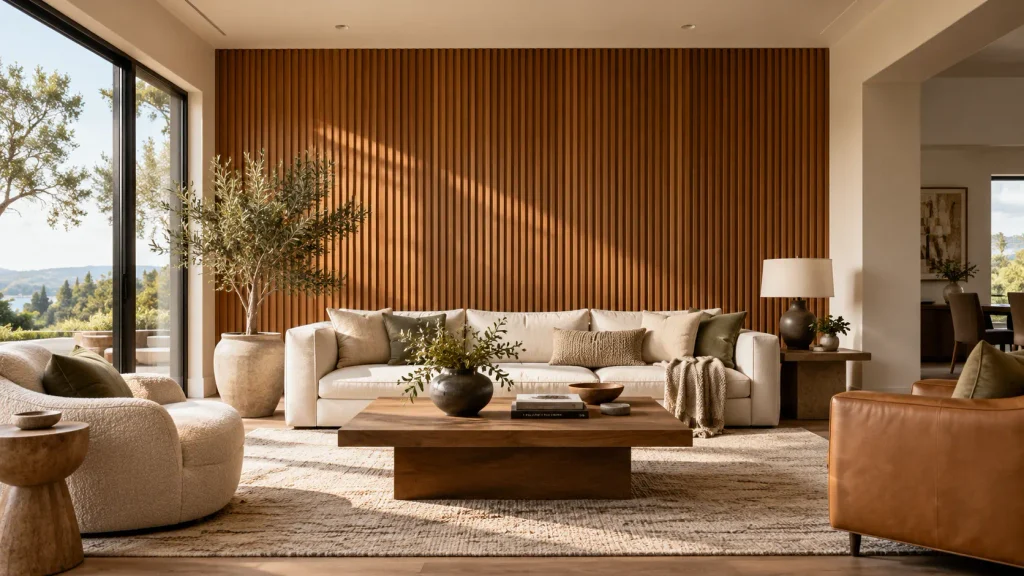
In interior design, an accent wall is a deliberate contrast: one surface receives a different treatment so the eye settles there first. The contrast can come from color, relief, pattern, material, or lighting, and it does not need to be bright or dramatic. A softly textured wall in a tone close to its neighbors can work as an accent as effectively as a saturated paint color.
Accent Wall vs. Feature Wall: Is There a Difference?
The two terms are commonly used interchangeably, and there is no universally fixed distinction. A single painted wall and a wall built from dimensional panels can both go by either name, so the choice of word says little about the design itself.
What Is the Purpose of an Accent Wall?
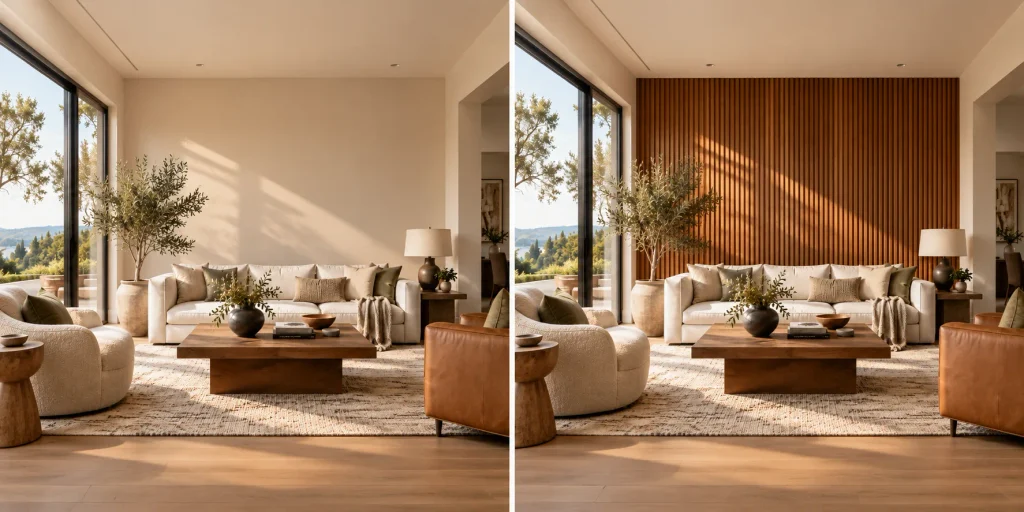
An accent wall serves five main design functions. It directs attention, adds dimension, emphasizes existing architecture, separates zones in a room, and helps express your personal style.
- Create a focal point
- Add depth, texture, and visual interest
- Highlight architectural features
- Define different areas within a room
- Express personal style without redesigning the entire room
Create a Focal Point
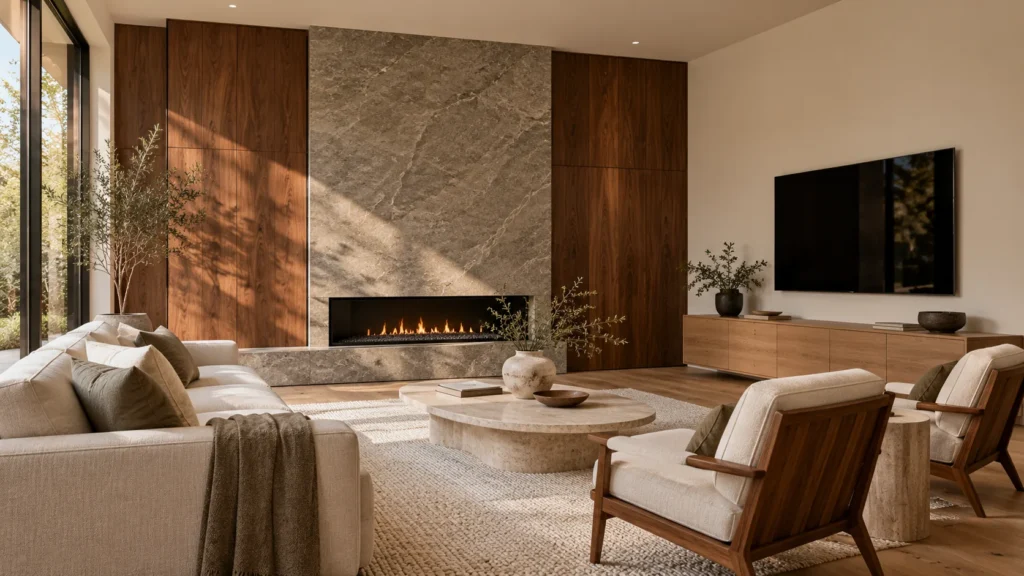
An accent wall creates a clear focal point, whether it frames a bed or sofa, highlights a fireplace, or forms part of a TV or media wall. Treating that wall differently gives the layout a clear center. In practice, the furniture arrangement then reads as intentional because it faces or backs onto the highlighted surface.
Add Depth, Texture, and Visual Interest
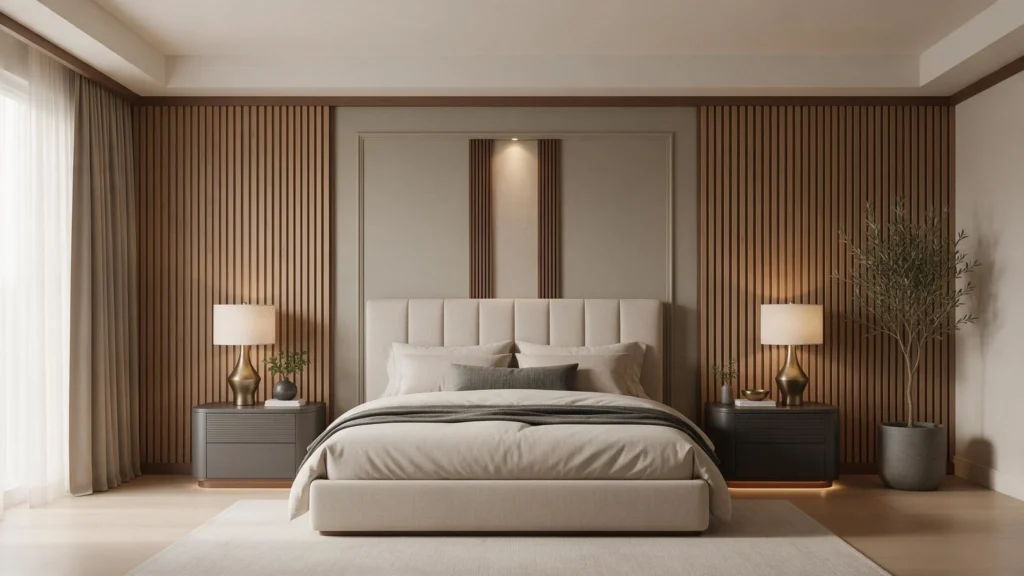
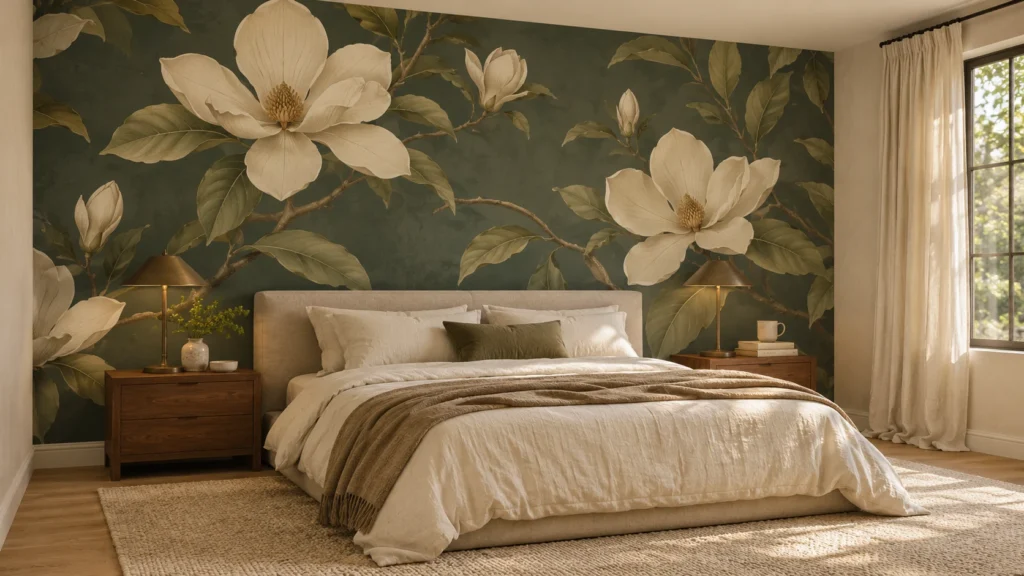
A surface treatment can add dimension without bright color. Plaster-like finishes, vertical wood slats, or shallow relief panels catch light at different angles, so the wall changes in appearance through the day. This approach suits homeowners who want interest in a calm, neutral palette.
Highlight Architectural Features
Niches, fireplaces, and built-in shelving already create structure in a wall. An accent treatment can frame them, for example by finishing the fireplace surround and the wall around it in a contrasting material. The result is that the existing detail looks designed rather than incidental.
Define Different Areas Within a Room
In open-plan spaces, one treated wall can mark the dining zone, the reading corner, or the entry without adding partitions. The visual boundary is soft: the room stays open, but each area gets its own identity. A subtly textured wall behind the dining table is a common example.
Express Personal Style Without Redesigning the Entire Room
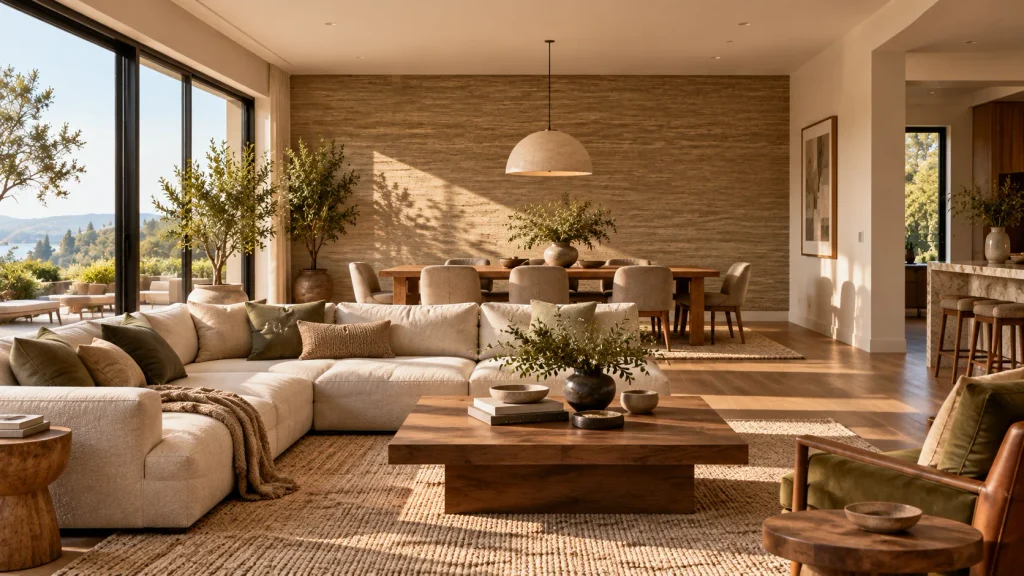
One wall can change the mood of a room while the furniture, flooring, and remaining walls stay the same. This makes it a contained way to introduce a bolder color, a pattern, or a crafted material, and to adjust it later if tastes change.
What Are the Different Types of Accent Walls?
One useful way to group accent walls is by their visual effect or design approach. The categories below are a starting point, and many designs combine more than one: a board-and-batten wall painted in a deep color, for instance, is both patterned and color-driven.
Color Accent Walls
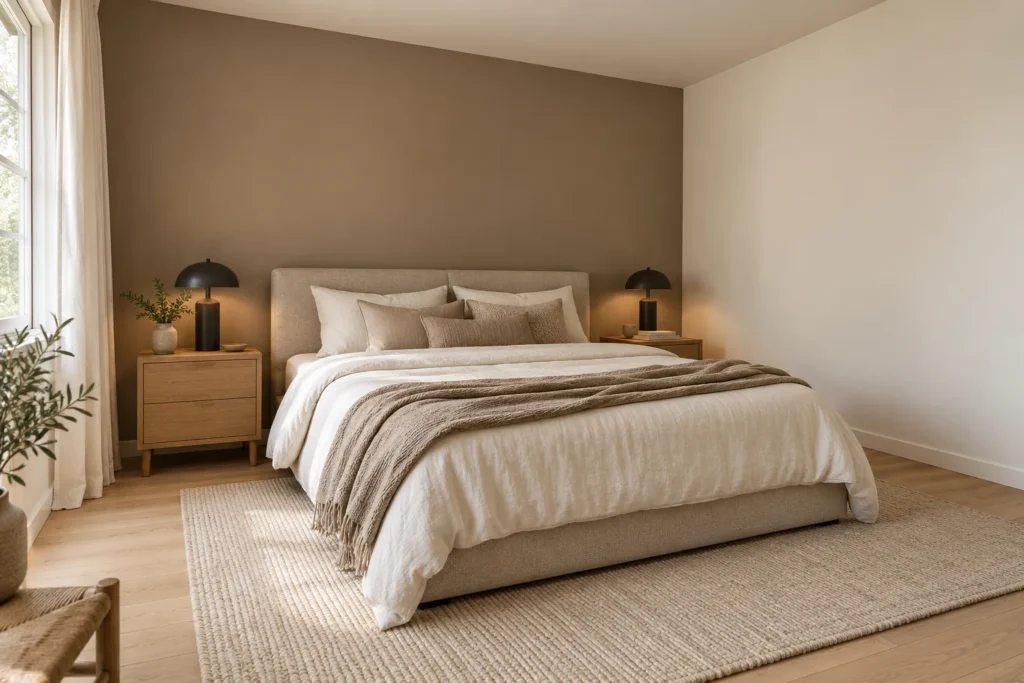
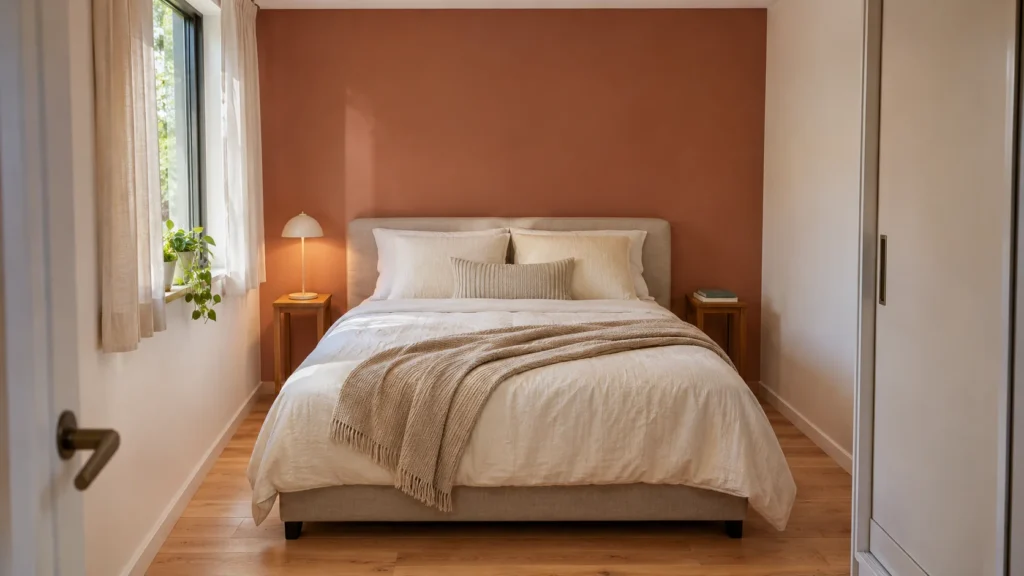
A color accent wall uses a contrasting or complementary paint color on one wall. The contrast can be strong, such as deep navy against warm white, or subtle, such as a muted green one or two shades darker than the surrounding walls. Color is the simplest type to apply and the easiest to change.
Textured Accent Walls
Textured accent walls create interest through tactile relief, visible grain, or variations in the finish. Some add physical depth, as plaster-like finishes do, while others, such as limewash, create a softer impression of texture through tonal movement. Both often look different under daylight and evening lighting, and texture works well where a room already has plenty of color and needs depth instead.
Patterned and Geometric Accent Walls
Patterned walls use repeated lines, shapes, or motifs. Wallpaper patterns, molding compositions, and board-and-batten accent walls all create rhythm and structure through repetition. Scale matters here: a large-scale pattern on a small wall can overwhelm it, while evenly spaced vertical lines can make a ceiling feel higher.
Architectural and 3D Accent Walls
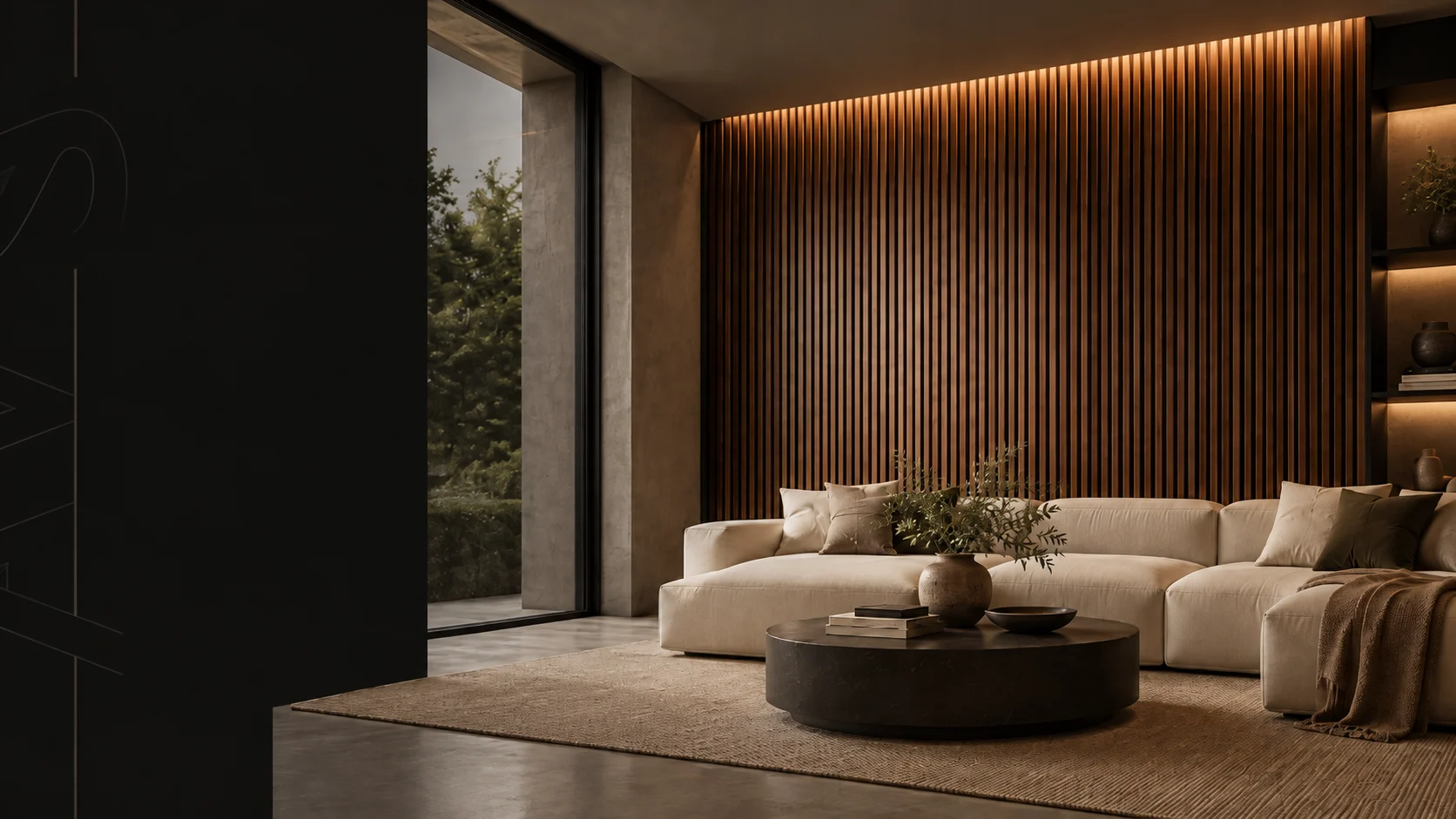
Architectural accent walls add physical dimension. Slats, 3D accent wall panels, recessed niches, and integrated lighting turn the wall into a sculptural element that casts shadows and changes with the light. These treatments are typically designed to fit a specific wall, which is why they often involve planning around outlets, switches, and architectural interruptions.
Mixed-Material Accent Walls
Mixed-material walls combine two or more treatments, such as wood and stone around a fireplace or paint paired with molding. The challenge is balance: the materials should complement one another through color, scale, or finish so the wall reads as one composition.
| Accent wall type | Defining feature | Typical design effect | Example |
|---|---|---|---|
| Color | Differentiated paint color | Contrast or calm focal point | Muted green wall behind a bed |
| Textured | Distinct surface texture | Depth and tactile interest | Limewash-style living room wall |
| Patterned/geometric | Repeated lines, shapes, or motifs | Rhythm and structure | Board-and-batten entryway |
| Architectural/3D | Dimensional construction | Sculptural focal point | Wood slat media wall |
| Mixed-material | Multiple coordinated finishes | Layered, custom composition | Wood and stone fireplace wall |
Each type can be built from a range of finishes, and the right one depends on the room’s lighting, use, and surrounding surfaces.
Where Can You Use an Accent Wall?
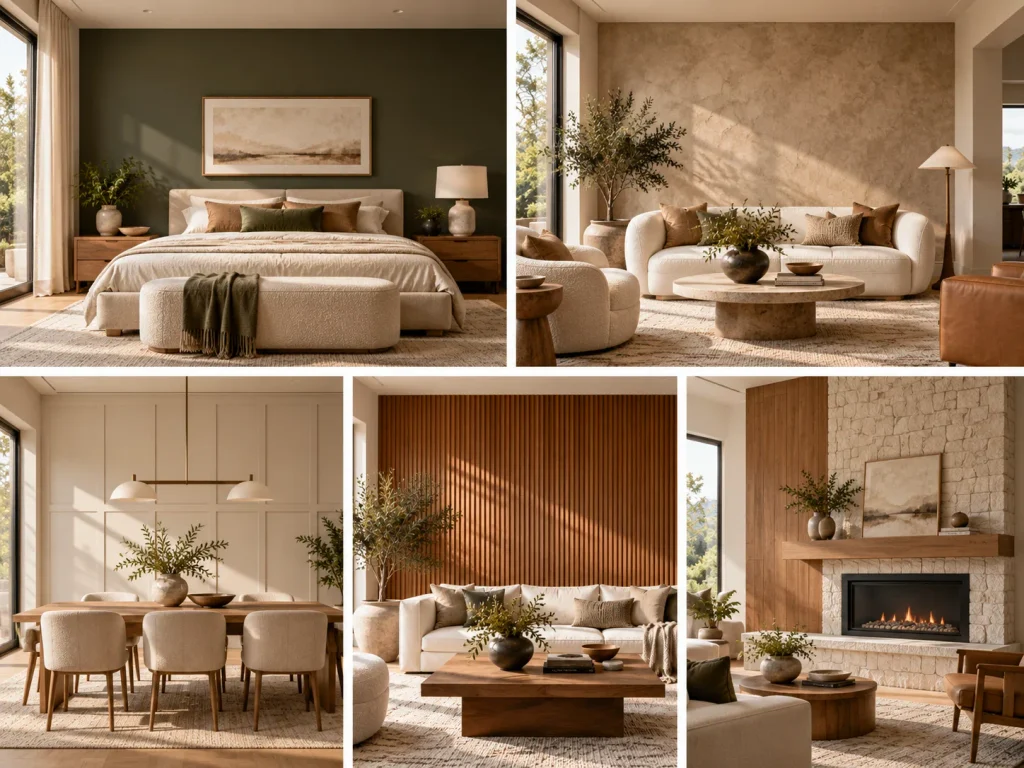
The right wall depends on what the room does. Room function, sightlines from the entrance, furniture placement, and lighting decide where the eye naturally goes, and the accent wall should follow that path rather than compete with it. The examples below show how this plays out in the most common spaces.
Living Room Accent Walls
The most common living room choices are the wall behind the sofa, the fireplace wall, and the TV or media wall. Choose the wall that best supports the room’s main focal point and furniture layout, whether it sits behind the sofa or faces the seating area. Homeowners exploring this space can see living room accent wall design options built around these layouts.
Bedroom Accent Walls
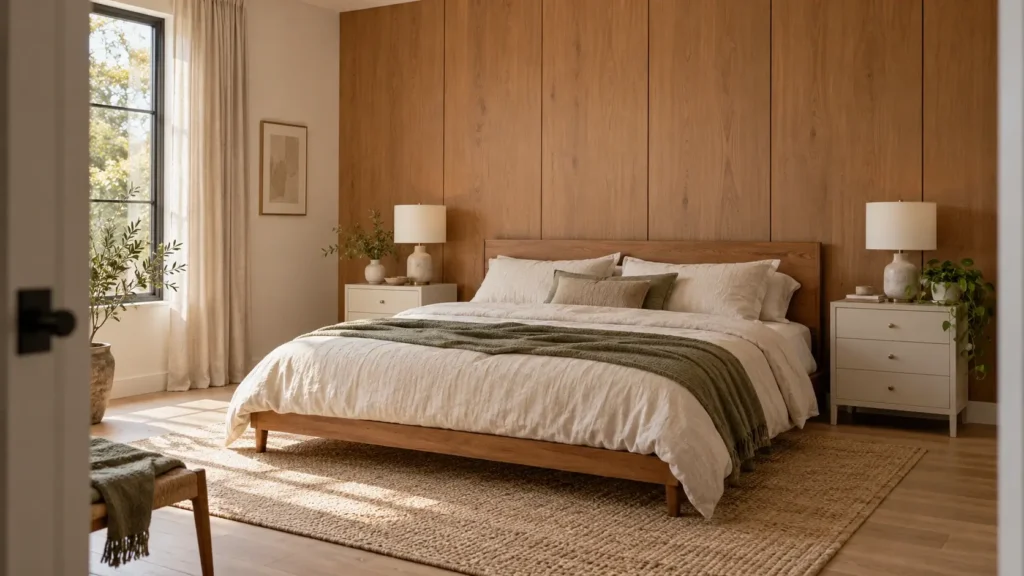
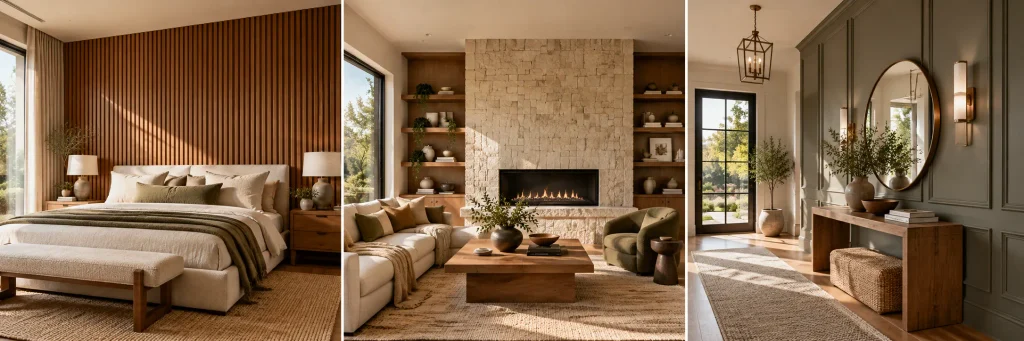
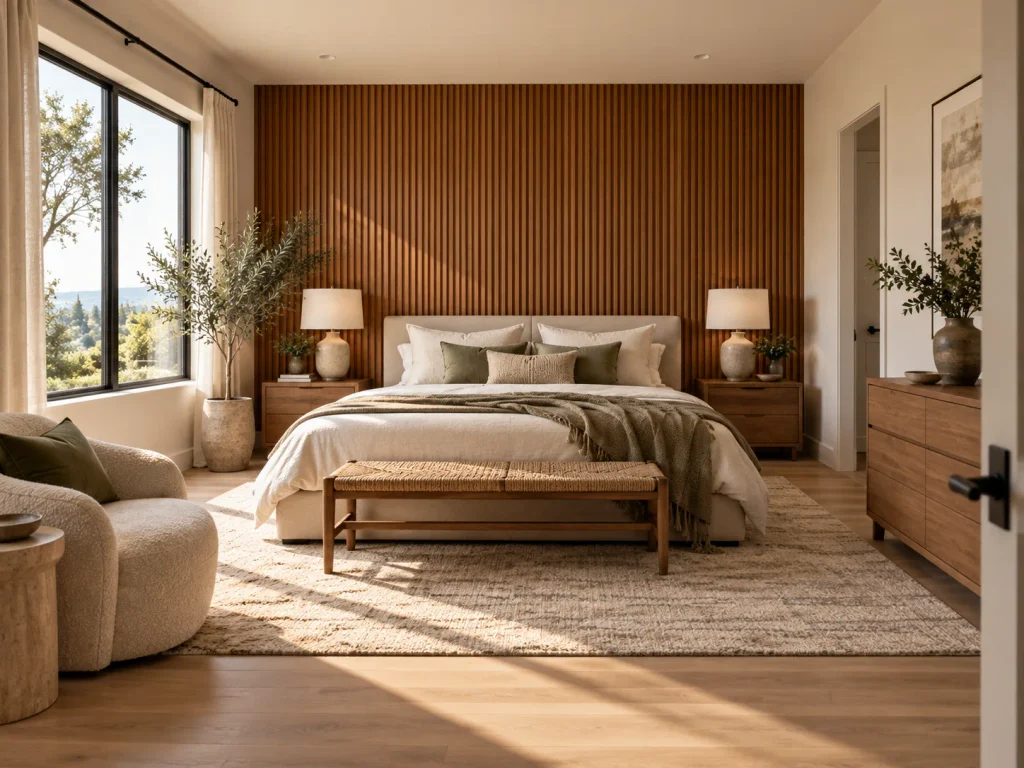
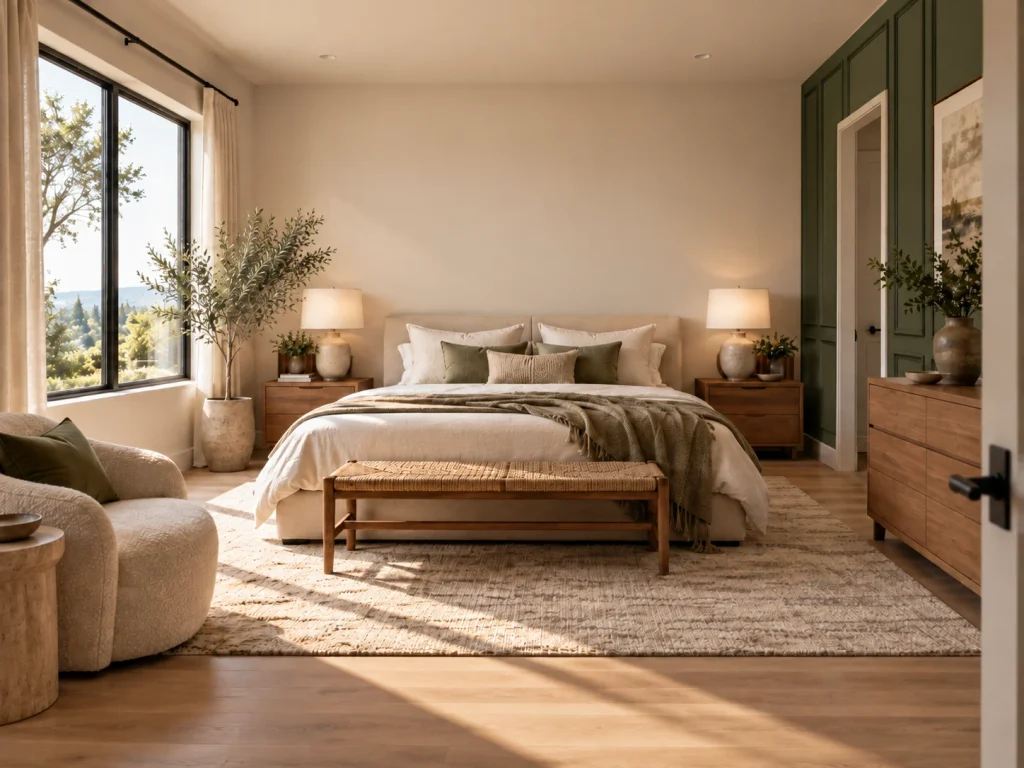
In a bedroom, the headboard wall is often a natural focal point because it frames the bed and anchors the room’s main furniture arrangement. The treatment should relate to the width of the bed and the lighting: a panel composition that extends slightly beyond the headboard on each side looks balanced, and wall lights or lamps can emphasize the texture. Ideas for this room are collected under bedroom accent walls.
Dining Room and Kitchen Accent Walls
A dining room accent wall defines the eating zone, especially in open-plan layouts. Kitchens need more care. Surfaces near a range, sink, or backsplash face heat, moisture, and grease, so the finish has to suit the specific exposure of that wall, and no single treatment fits every kitchen. Walls away from cooking and water, such as a breakfast nook or a wall beside the dining table, give more freedom. See kitchen accent wall design for approaches that account for these conditions.
Home Office and Commercial Accent Walls
In a home office, an accent wall that appears behind you on video calls should create interest without distracting from the person on screen, so a calm texture or muted color usually works better than a busy pattern. In commercial settings such as reception areas, boutiques, restaurants, and hotel lobbies, an accent wall can carry brand color, material, or logo placement and set the tone on arrival. Business owners can review commercial accent walls for this type of project.
Entryway and Hallway Accent Walls
Entryways and hallways shape first impressions, and they are often narrow. A treatment on the end wall of a hallway draws the eye forward, while subtle molding along a side wall adds interest without reducing the sense of width. Keep protruding elements shallow in tight corridors so circulation stays comfortable.
How to Choose the Right Wall for an Accent
There are no fixed rules for choosing the wall, so treat the following as a starting point. A good first candidate is the wall that already attracts attention when someone enters the room. Five questions help confirm the choice:
- Does the wall draw the eye on entry? The best candidate is usually visible from the doorway.
- Does it match the furniture layout? The wall should anchor the main seating, bed, or dining arrangement.
- How does light reach it? Check natural light through the day and artificial light in the evening, since both change how color and texture look.
- What are the proportions and interruptions? Windows, doors, vents, and nearby surfaces affect how much uninterrupted wall is available.
- Will it compete with another focal point? A television, a large window with a view, or a fireplace may already hold the attention.
Consider a typical bedroom: the door opens onto a side wall, a window sits on the other side wall, and the bed stands against the wall opposite the entrance, with no doors or windows on it. In this layout, the headboard wall is usually the stronger candidate. It is the first wall seen on entry, it offers an uninterrupted surface, and it frames the bed. Putting the accent on the window wall would split attention between the treatment and the view. In a different layout, for example with a window above the bed, the same logic can point to another wall.
Is an Accent Wall Right for Every Room?
Not necessarily. An accent wall works when it clarifies a room, and it works against the room when it adds another competing element. Results depend on proportions, lighting, existing patterns, and how the room is used.
An accent wall may work well when:
- the room has one clear focal point, such as a bed, fireplace, or seating area;
- the other walls are relatively quiet in color and pattern;
- the chosen wall has enough uninterrupted surface to carry the treatment;
- the treatment suits how the room is used, for example a durable choice in a busy entry.
Reconsider the idea when:
- the room already has several strong features, such as patterned flooring, bold art, and a statement fireplace;
- the layout has no natural focal wall, and any choice would feel arbitrary;
- the wall is broken up by many doors, windows, or vents;
- the room is small and the planned treatment is large in scale, since proportion may tip the balance toward heaviness.
Neither small rooms nor dark colors rule out an accent wall. A dark, well-lit wall in a small bedroom can add depth, and the outcome depends on the combination of contrast, lighting, and proportions.
Final Thoughts: Making an Accent Wall Work for Your Space
An accent wall is a single surface treated differently to give a room a focal point, depth, or definition. It works best when the treatment fits the room’s layout, lighting, and function. Start with the wall that already draws attention, then choose an approach, from paint to a custom architectural installation, that suits the rest of the interior.
If you are weighing options for a specific room, a consultation can help match the design to your space and practical requirements. Use Request a Consultation to talk through your project.
Leave your contact details and we’ll get in touch to discuss your space, ideas, and next steps.
Frequently Asked Questions About Accent Walls
Does an accent wall have to be a different color?
No. Material, texture, pattern, and dimension can all distinguish an accent wall. A wall in the same color family as the room can still stand out through wood slats, plaster-like texture, or molding, which is useful when the goal is depth without strong contrast.
Can a room have more than one accent wall?
Sometimes. Several treated walls can highlight different zones, such as the dining area and the seating area in an open-plan space, but they should support one overall composition, for example through a shared color or material. A second accent wall can create competing focal points, particularly when both treatments are equally prominent, so many designs keep one dominant surface.
Do accent walls make a room look smaller?
It depends on color, contrast, proportions, and lighting. A dark, saturated wall on the short end of a narrow room can make it feel shorter, while a lighter or textured wall in a well-lit room often adds depth without reducing perceived space.
Are accent walls still in style?
Accent walls remain in use, and the current approach favors deliberate composition over a single bright wall added without context. Designs that connect with the room’s architecture, lighting, and furniture tend to age better than isolated color choices.